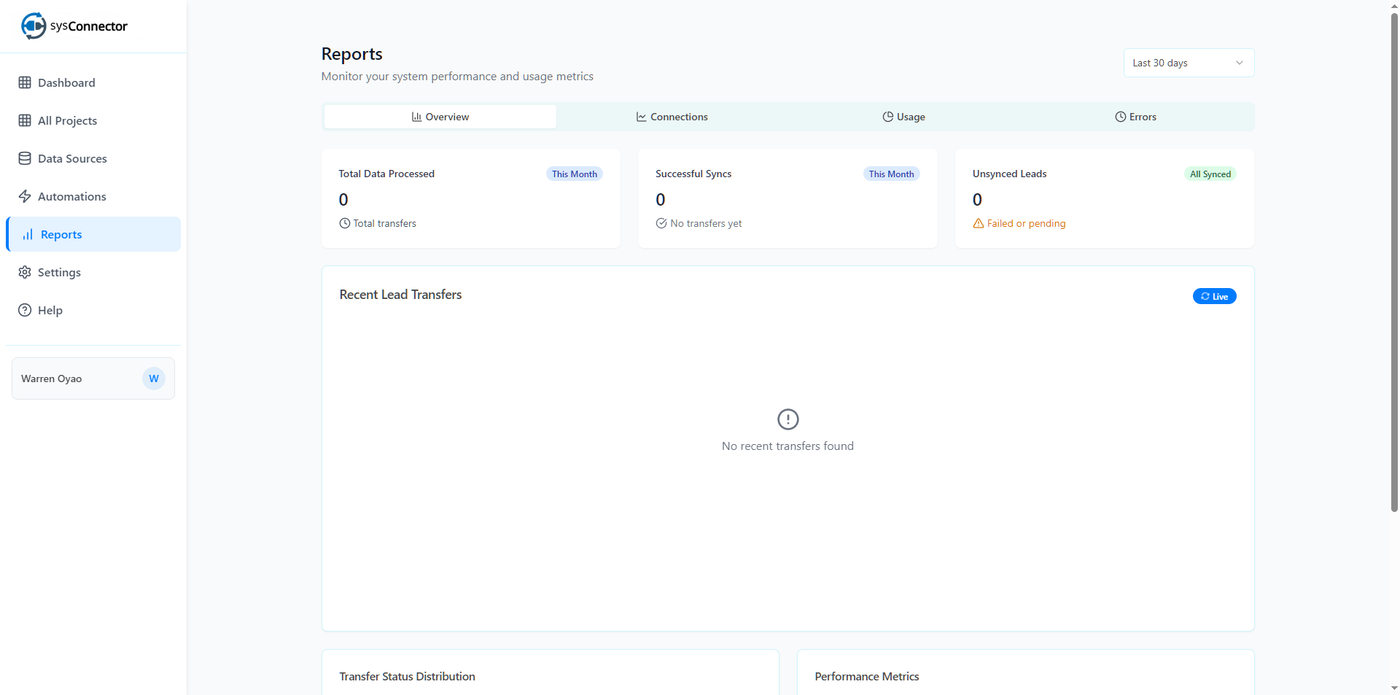

This guide walks you through the complete process of connecting Facebook Lead Forms (Source) to Adobe Campaign (Destination) using the sysConnector platform. Once configured, leads will sync automatically in real time.
Prerequisites
Before starting, ensure you have:
Admin access to the Facebook Page & Lead Forms
Adobe Campaign credentials:
Tenant ID
Client ID
Client Secret
Step 1: Create a New Connection
Log in to the sysConnector.
Click Create Connection.
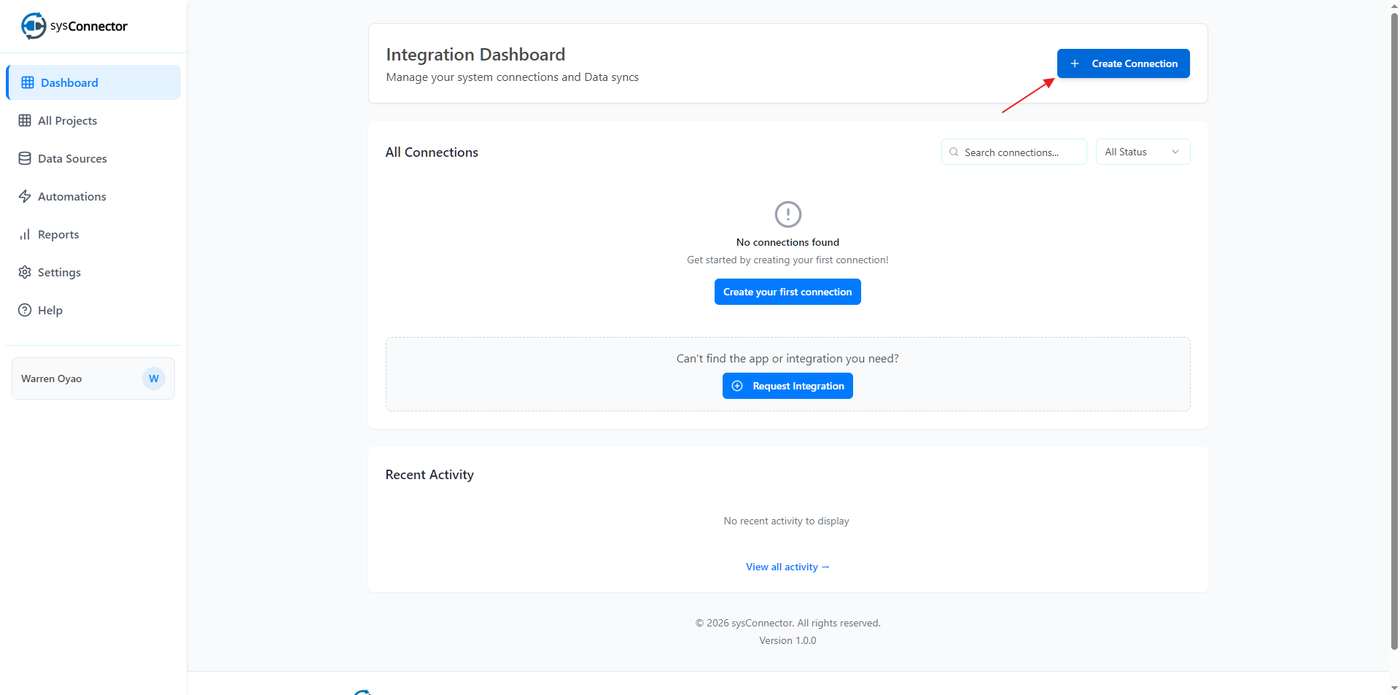
If your app is missing, click Request Integration to notify the sysConnector team.
Step 2: Configure Facebook as the Source
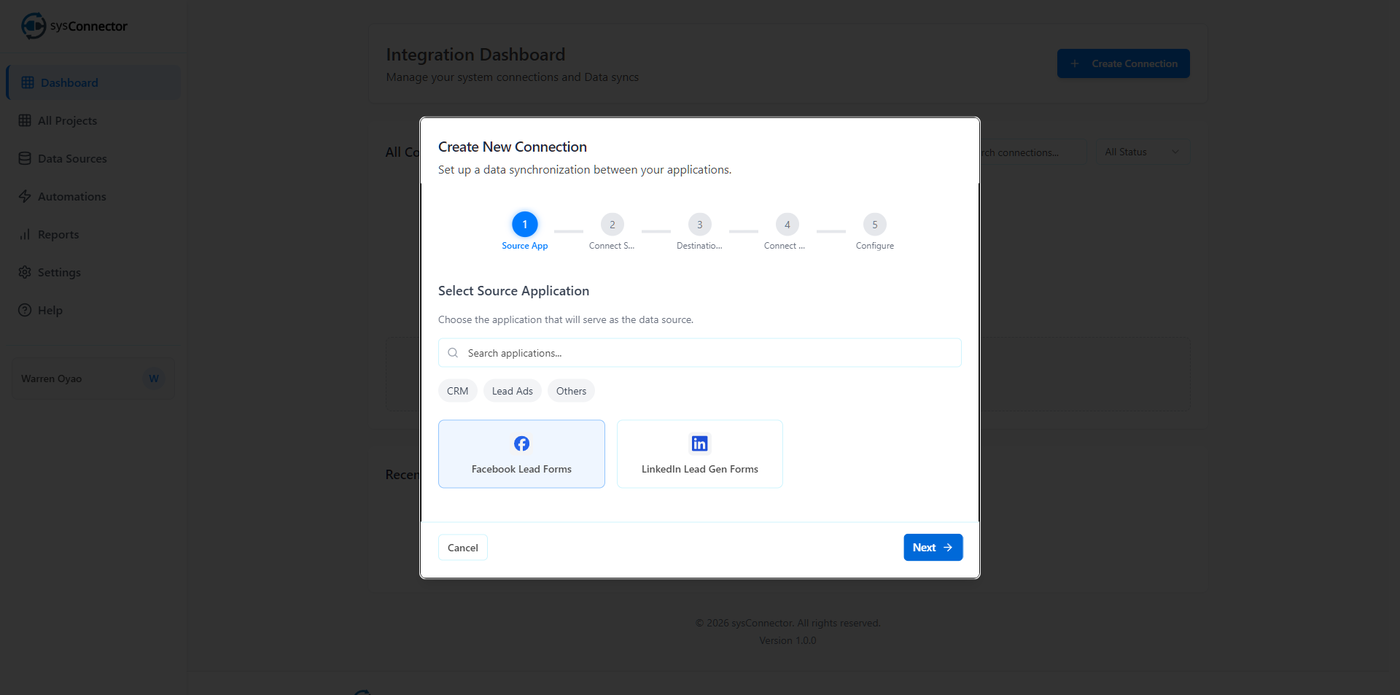
Select Facebook Lead Forms as the Source App
From the app list, choose Facebook Lead Forms, then click Next to continue.
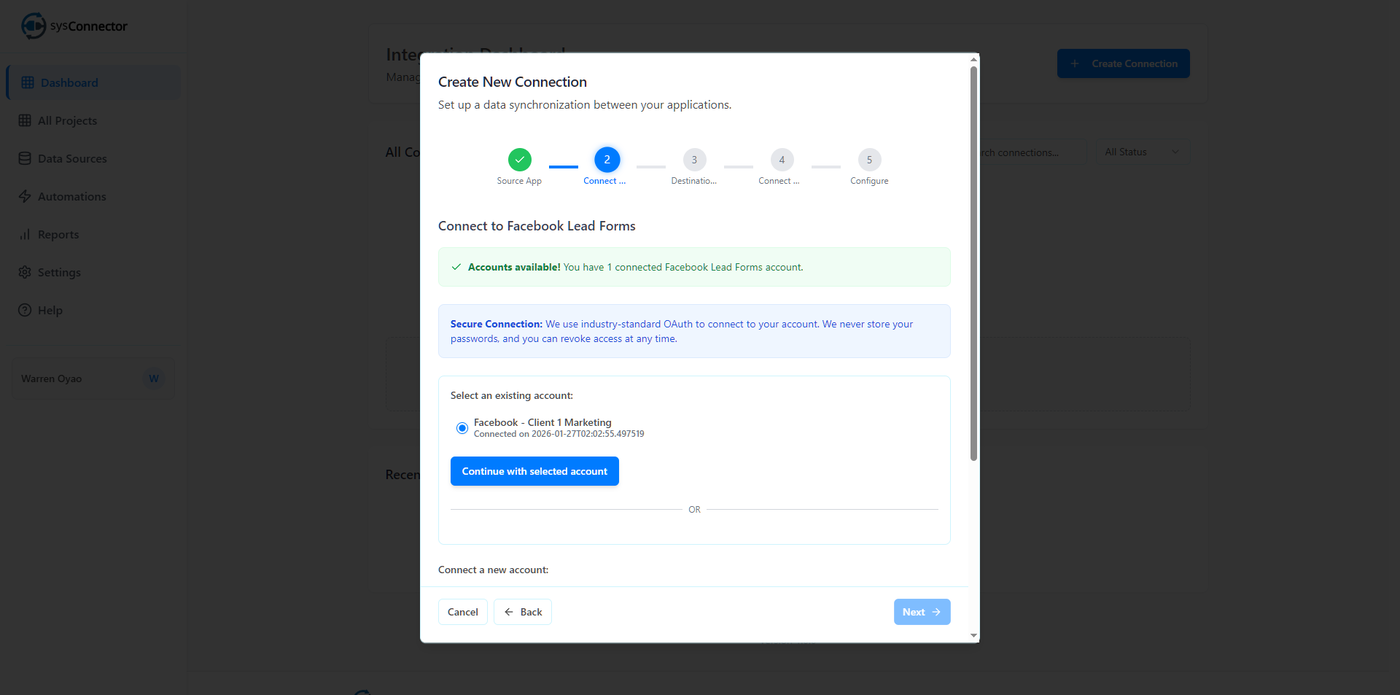
Log in or Select an Existing Facebook Account
If this is your first connection, you will be prompted to log in to Facebook.
If you have connected Facebook before, select an existing account from the list.
Choose an Existing Account or Connect a New One
If an account already exists, select it and click Next.
If not, click Connect New Account.
Enter an Account Name and Connect
Enter an Account Name.
Recommended: Use the Facebook Page name (e.g.,Client 1 Marketing) for easy identification.
Then click Connect to Facebook Lead Forms.Authorize Page Access
Click Connect to [Page Name] and approve the permissions in Facebook.
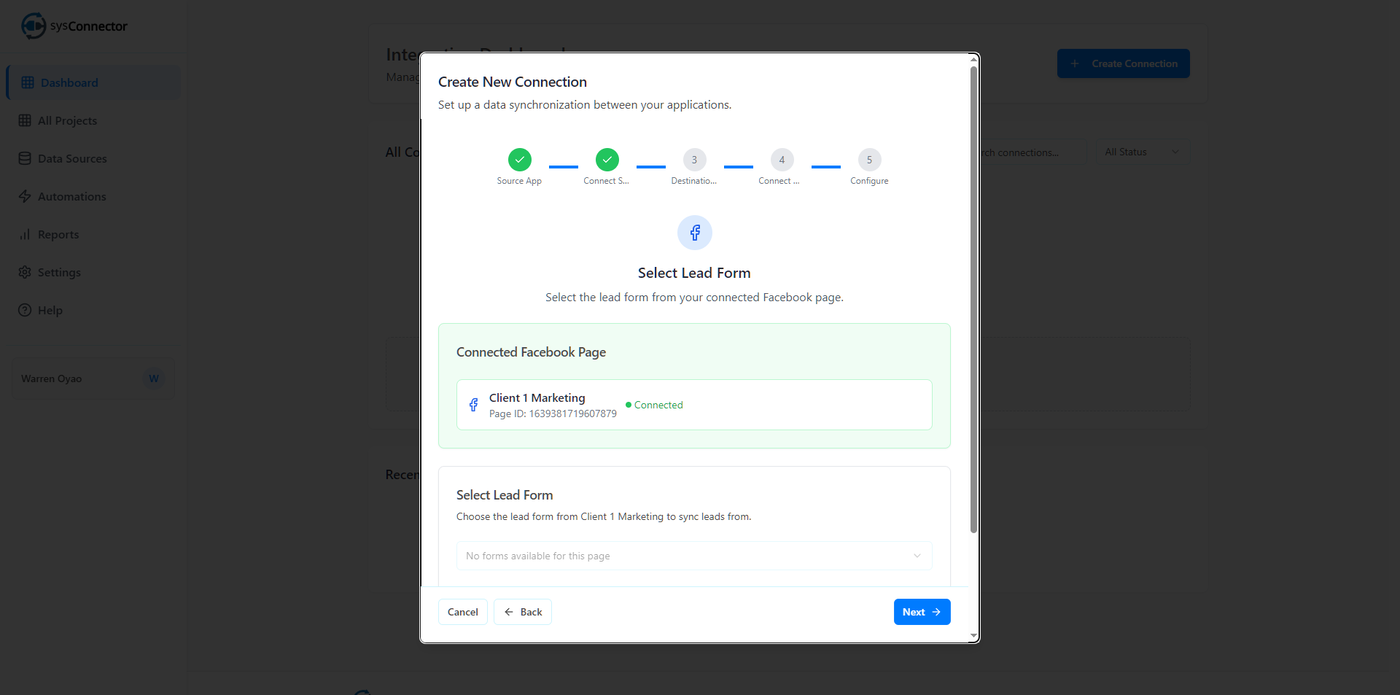
Select the Lead Form
Choose the Lead Form you want to sync (e.g.,Marketing Survey Form).
Each connection supports one form only, so create separate connections for additional forms.
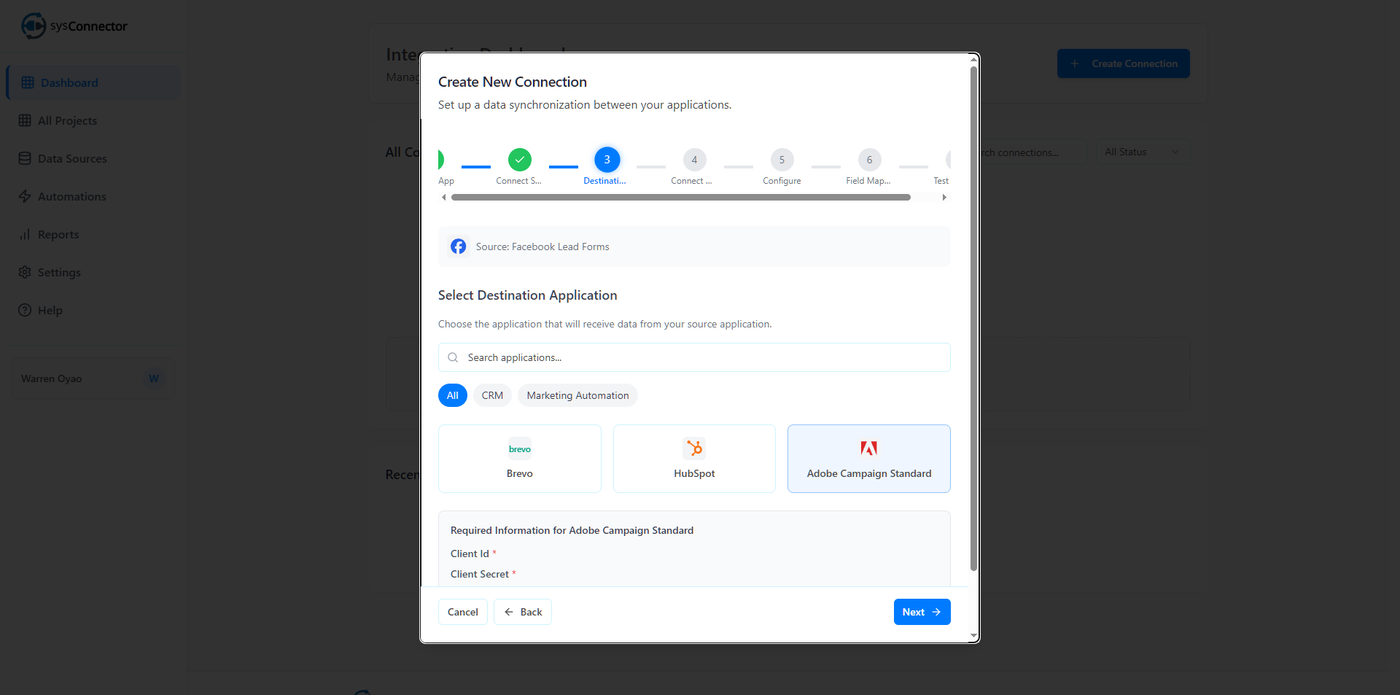
Step 3: Configure Adobe Campaign as the Destination
Select Adobe Campaign as the Destination App.
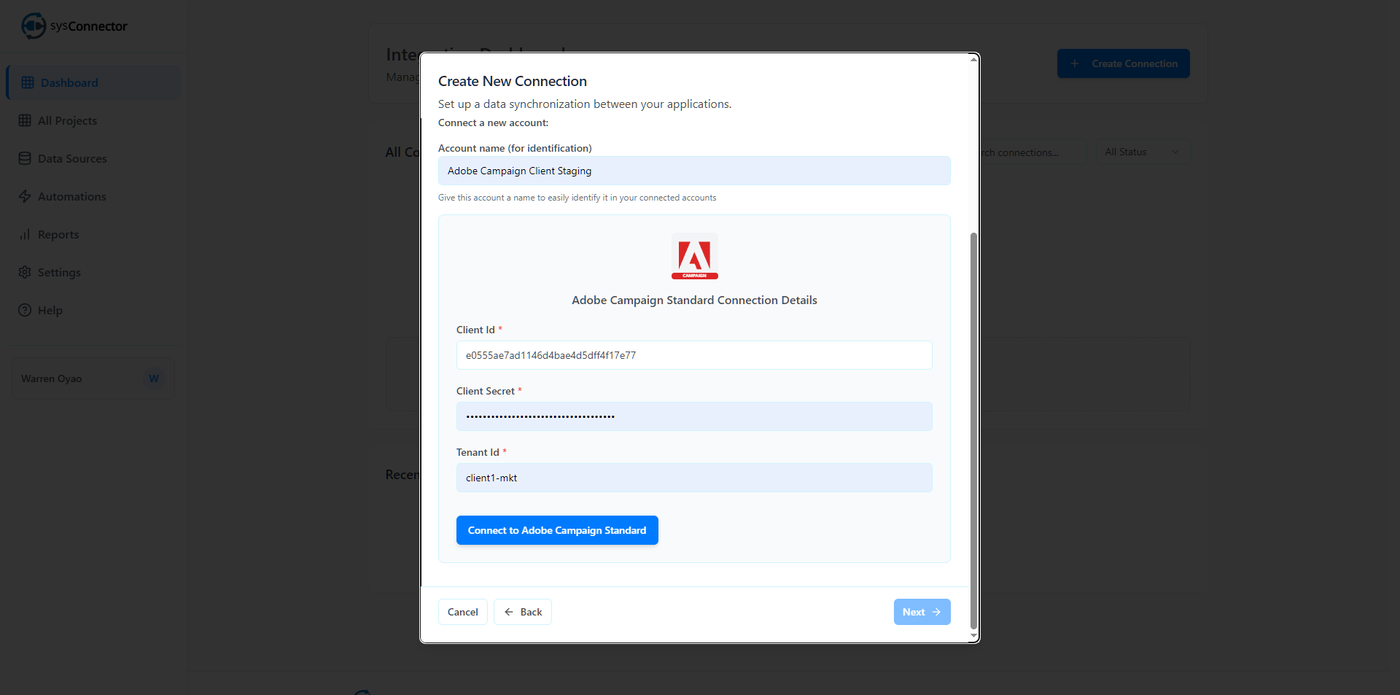
Enter a Destination Account Name
Example:Adobe Campaign Client StagingorAdobe Prod.Enter required credentials:
Tenant ID
Client ID
Client Secret
Click Connect to Adobe Campaign Standard to verify access.
Step 4: Define Connection Settings
Connection Name
Use a clear, descriptive name such as:2026 Product Launch – Facebook LeadsProject Selection
Choose an existing Project (folder) or use Unassigned.Sync Frequency
Select Event Space to enable real-time syncing when a lead is submitted.
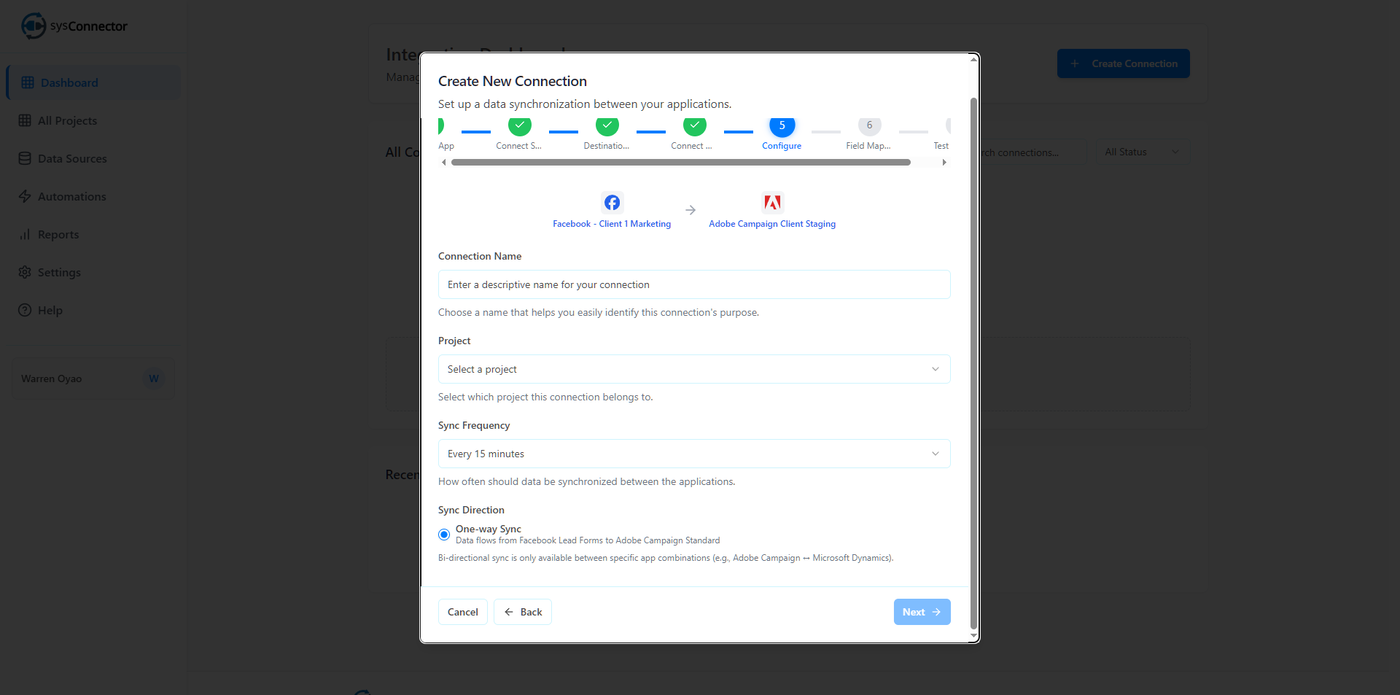
Projects act like folders inside sysConnector.
Select an existing Project, or
Leave it as Unassigned if no structure exists yet
This is especially useful for:
Separating marketing vs sales workflows
Organizing by region or business unit
Controlling user access permissions
Step 5: Field Mapping and Data Transformation
This step defines exactly how data collected in Facebook Lead Forms is translated, formatted, and delivered into Adobe Campaign. Proper configuration here ensures clean data, accurate reporting, and successful campaign automation.
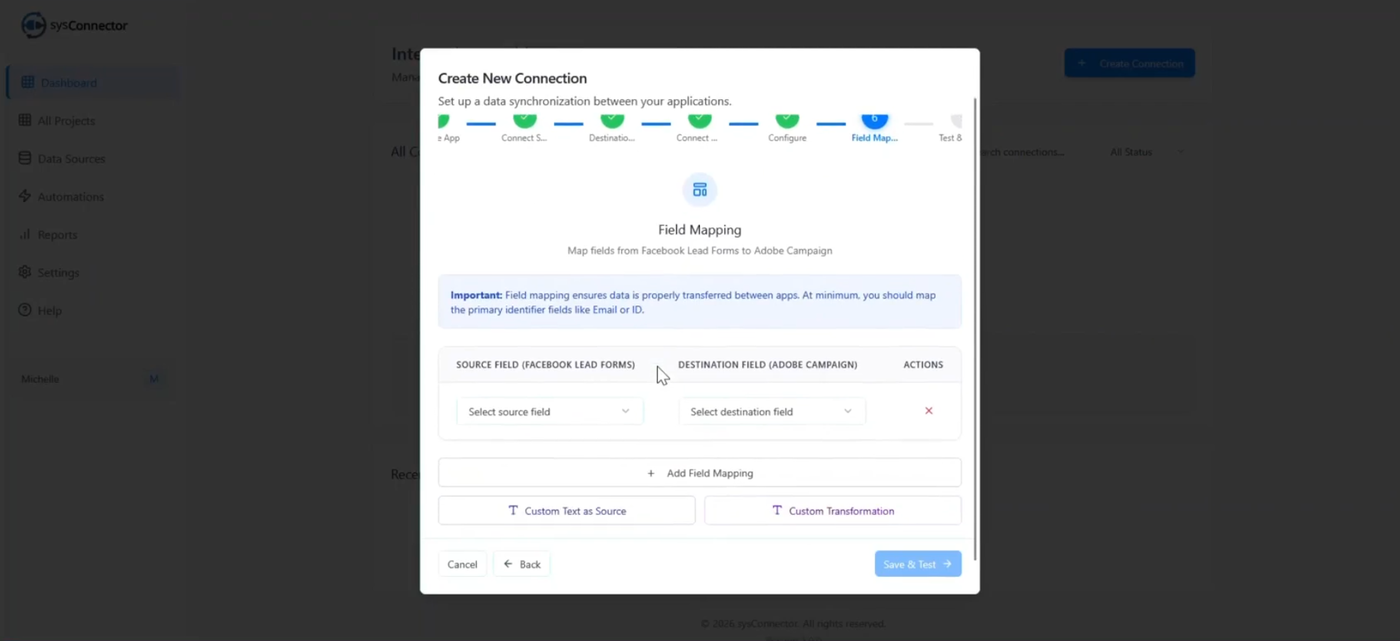
5.1 Basic Field Mapping
This section establishes a direct relationship between Facebook fields (source) and Adobe Campaign fields (destination).
Process:
For each data point, select the Facebook field on the left.
Map it to the corresponding Adobe Campaign field on the right.
Example:
Facebook field Name → Adobe Campaign field First Name
Facebook field Email → Adobe Campaign field Email
If a required Adobe Campaign field is not mapped, records may fail to sync or be rejected.
5.2 Using Custom Text
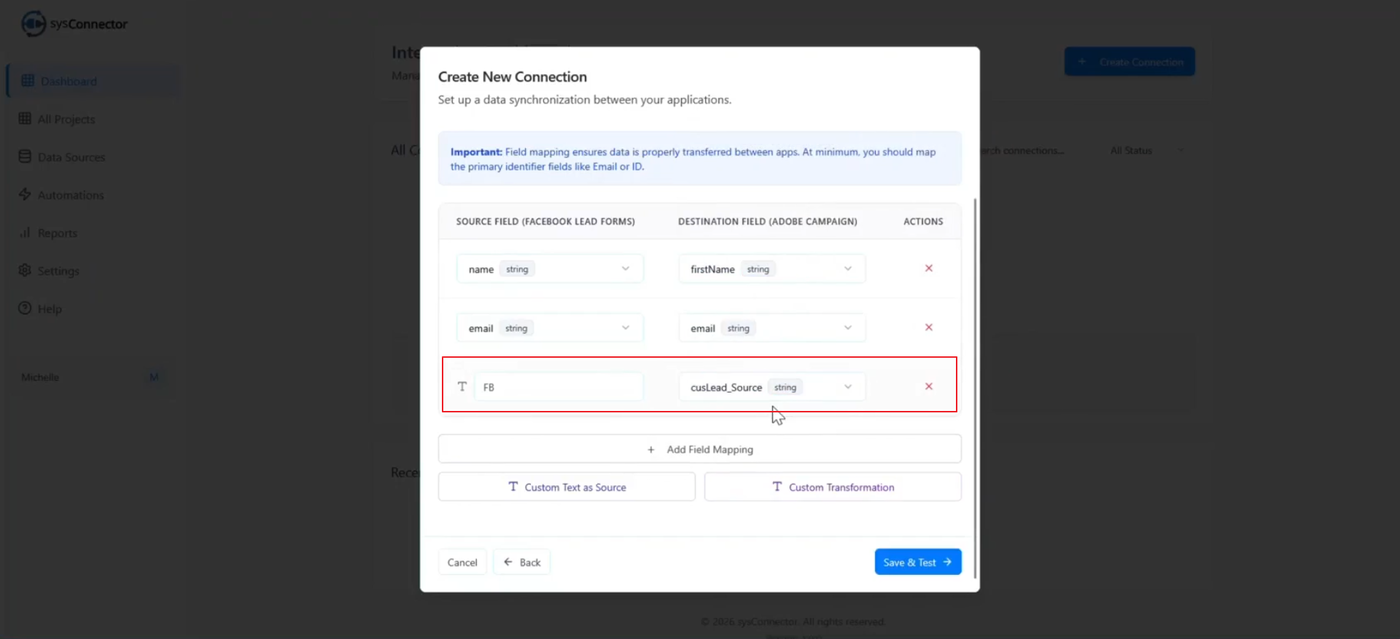
The Custom Text feature allows you to send a fixed value that does not exist in the Facebook form itself.
Common Use Case:
Create a field in Adobe Campaign called Lead Source
Use Custom Text to automatically populate it with Facebook for every lead coming through this connection
This is especially useful for campaign tracking, reporting, and segmentation.
5.3 Custom Transformations (Merging and Formatting)
Custom transformations allow you to manipulate or enhance data before it reaches Adobe Campaign, which is useful when the data structures between systems do not align perfectly.
Merge Fields
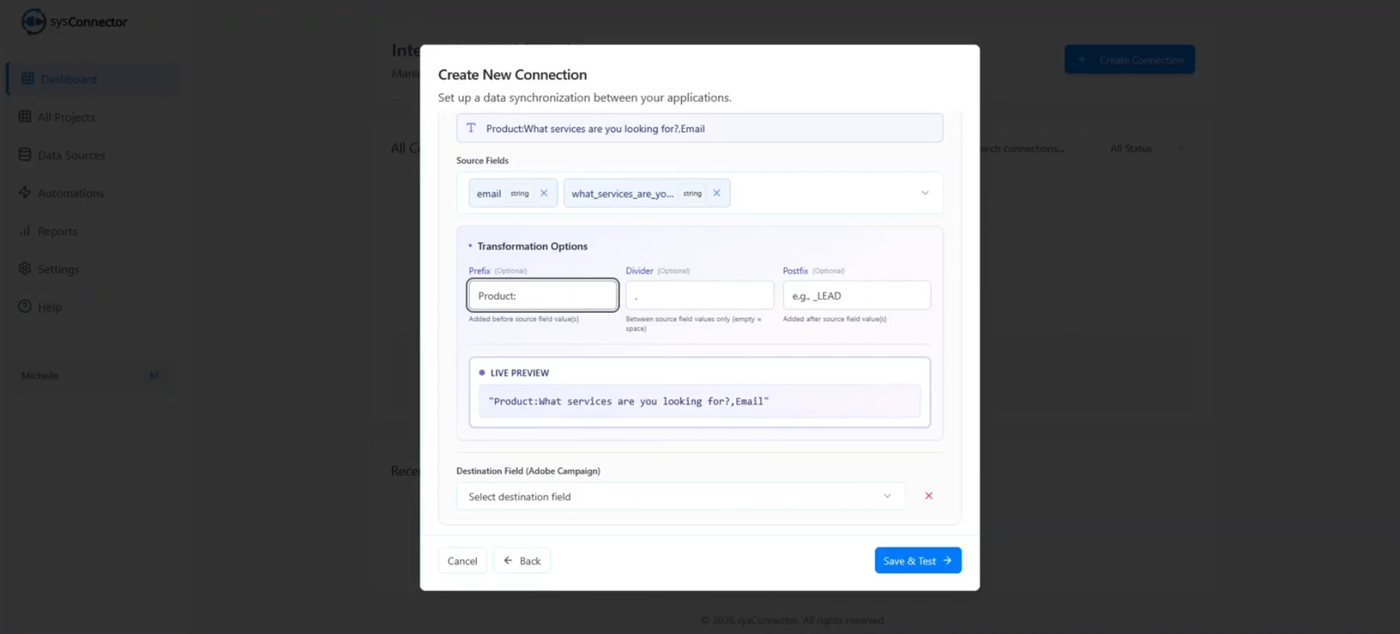
You can select multiple Facebook fields and combine them into a single Adobe Campaign field.
You may apply a divider (comma, dash, pipe, etc.) between values for readability.
Example:
If a user selects three product interests in Facebook, you can merge all three into one Interests or Comments field in Adobe Campaign.
Prefix and Postfix
You can add text before (prefix) or after (postfix) a value.
Example:
Prefix:
FB-Result:
FB-john.doe@email.com
This is useful for tagging, internal labeling, or adding context to incoming data.
5.4 Data Type Conversion
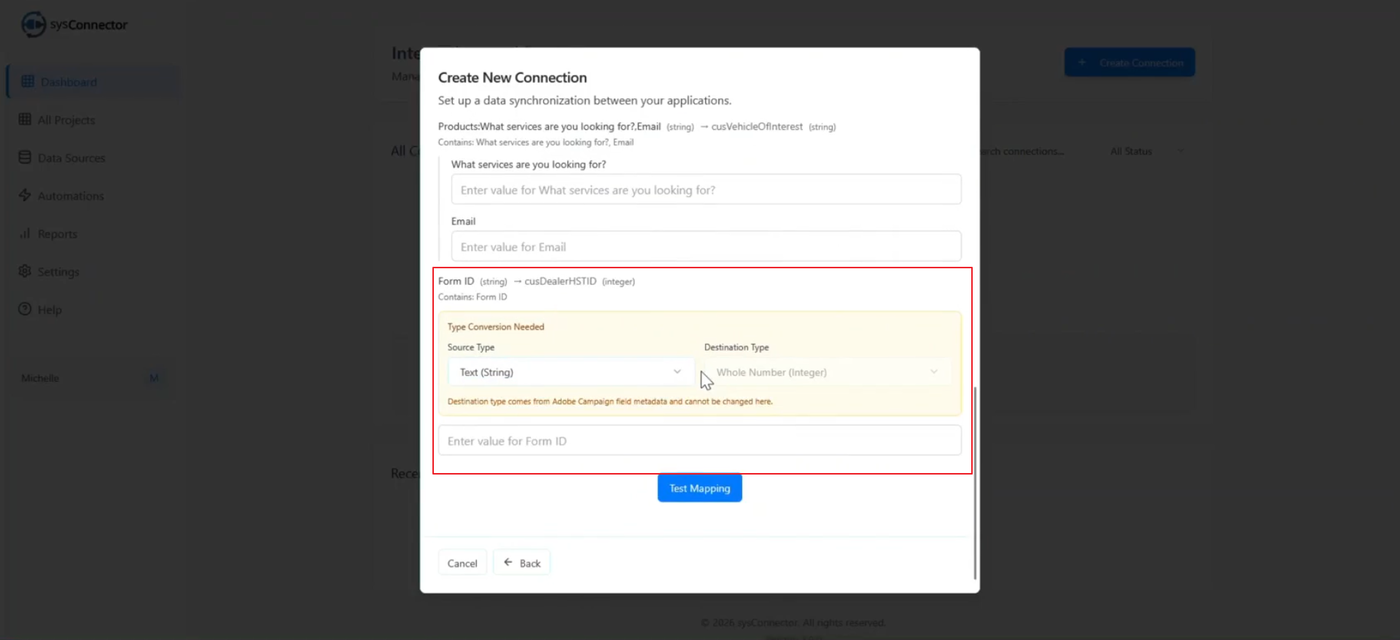
In some cases, Facebook sends data in a format that does not match the required data type in Adobe Campaign.
Example:
Facebook sends a value as Text
Adobe Campaign requires an Integer
How sysConnector Handles This:
During testing, sysConnector automatically detects mismatched data types.
Since Adobe Campaign field types are fixed, you must adjust the Source Type in sysConnector to match the destination field.
This ensures records are accepted and processed correctly.
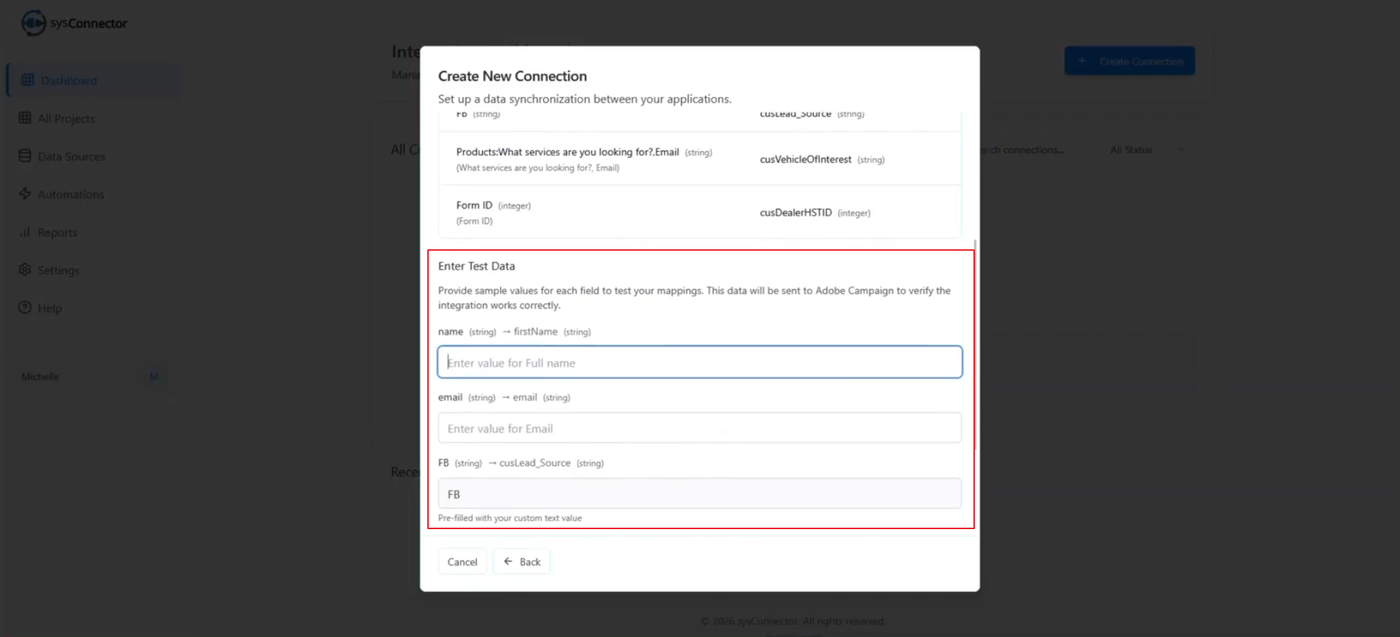
5.5 Mandatory Testing and Validation
Before a connection can be activated, mapping must be tested successfully.
Process:
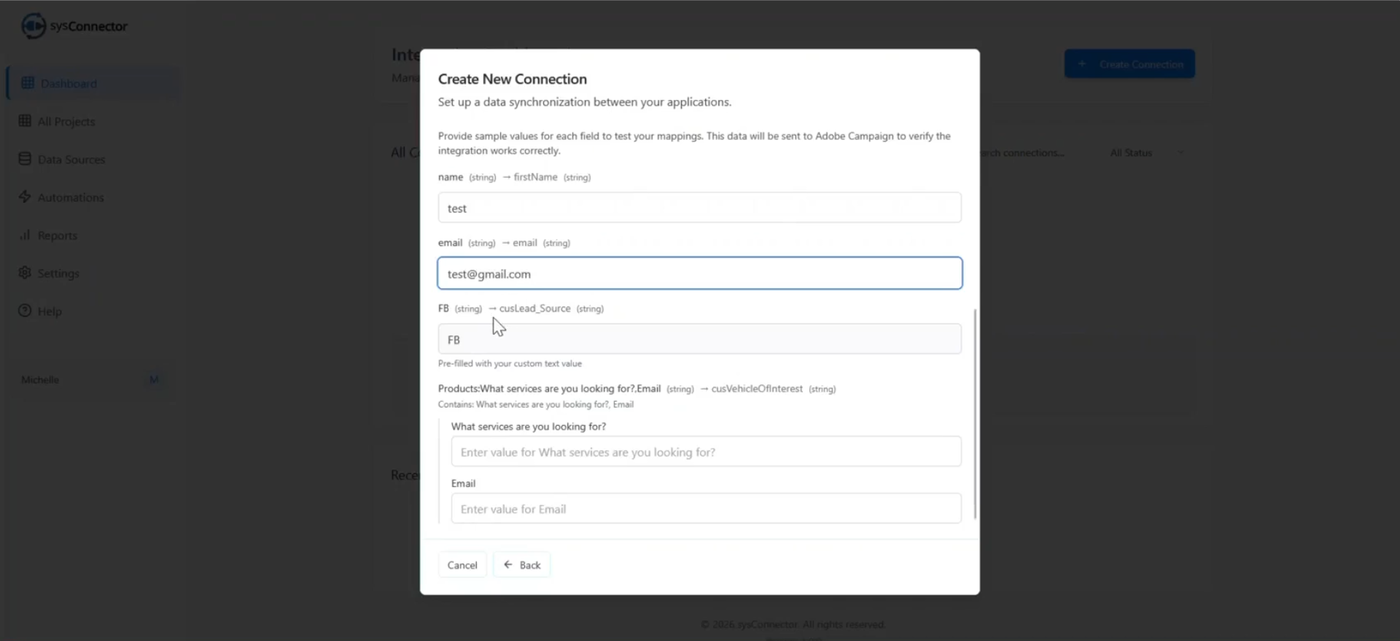
Enter sample test data for every mapped field.
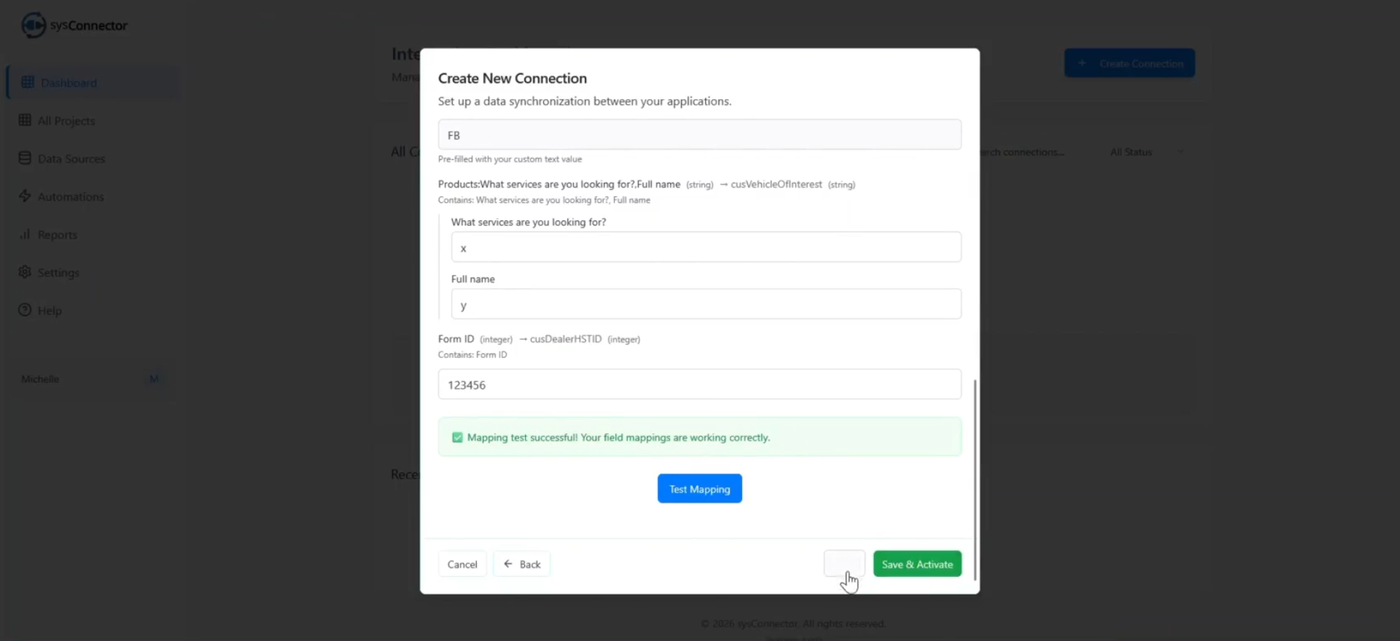
Click Test Mapping.
The system validates formatting (e.g., email fields must contain valid email formats).
After a successful test, log in to Adobe Campaign and confirm the test record appears correctly.
Activation is blocked until testing passes.
Step 6: Testing and Activation
Enter sample test data and click Test Mapping.
This step is mandatory before activation.Log in to Adobe Campaign and confirm the test data was received correctly.
Click Save and Activate to begin live syncing.
Managing Your Connection
Monitoring
Go to Reports to view:
Successful lead transfers
Failed sync attempts
Logs from the last 24 hours to 30 days